Scale your landscaping business,
stop trading hours for revenue

The 5-step roadmap landscape gardeners use to build a stronger business they can run passively, and sell one day.

Get the EXTENDED roadmap£99£29
Passive Landscaper 5 Step Landscape Business Growth guide on a workbench with laptop, phone, gloves and sticky notes

Lesson Previews

124 lessons. Every one is a system you can install this week

124 lessons across 5 pillars, with templates, scripts and SOPs landscape gardeners use to step off the tools.

Get all 124 lessons —£99£29

Example card

Lesson 01 / 124Audience · Website

Clear Messaging

Within five seconds, a visitor should understand what you do, who it is for, and what to do next.

Summary

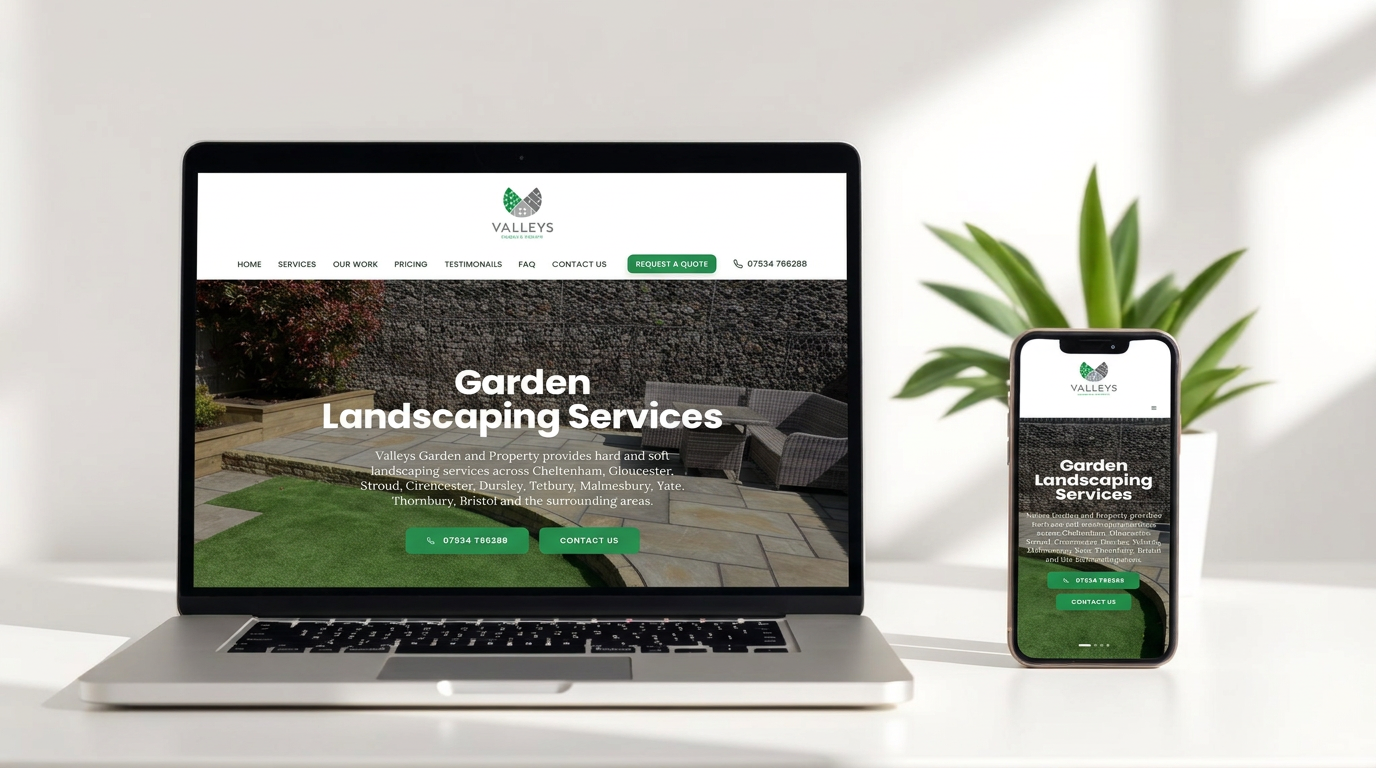
Most landscape gardening websites open with a slideshow of pretty gardens and a vague tagline, and the visitor has no idea within those first few seconds whether they are even in the right place. Clear messaging fixes that. The moment someone lands, they should know exactly what you offer, who it is for, and the single next step you want them to take.

Why do it

People do not read websites, they scan them, and they decide whether to stay in about the time it takes to read one line. If that line is fuzzy, they leave and click the next landscaper in the list. A homeowner wanting a full garden redesign and a developer wanting maintenance contracts both need to feel, instantly, that you are built for them. Confusion is the most expensive thing on your website because it costs you the visitor before they ever see your work.

The benefits

You stop losing people in the first five seconds. The right visitors lean in because the page speaks to their project, and the wrong-fit enquiries thin out because the page quietly tells them this is not for them. Every other page works harder too, because you are no longer relying on the visitor to piece together what you do.

What to expect

More of the people who land on your site actually scroll, click, and enquire, and the enquiries you get are better matched to what you offer. You will likely find your bounce rate drops and the quality of conversations going into your inbox goes up, because the people reaching out already understand and want what you sell.

Action items

0/3 done
  • Write a one-line value statement: sum up what you offer, who it is for, and the result they get. Place it at the top of your homepage.
  • Add clear next steps for the visitor to take: use a short, direct call to action such as "Book a Free Site Visit", "Get Your Quote" or "Request a Design Consultation."
  • Headline and CTA (call to action) on every page: assume visitors may land anywhere, not just your homepage, so make your offer clear everywhere.
Inside the courseRead this lesson →
Lesson 25 / 124Deals · Message Matching & Relevance

Consistency Across Touchpoints

Keep your ads and landing pages aligned so visitors know they are in the right place.

Summary

Consistency across touchpoints means the promise, look, and wording stay the same from the ad to the landing page to the follow-up. If your ad says "complete garden transformations" and the page they land on talks about "commercial grounds maintenance," the visitor feels they took a wrong turn and leaves. Matching every step keeps them moving forward.

Why do it

When the message shifts between the click and the page, the visitor's brain registers a tiny jolt of "this isn't what I expected," and that doubt is enough to lose them. Keeping the headline, imagery, and offer aligned reassures them instantly that they are in the right place and that you deliver what you advertise. It is a small discipline that quietly protects every lead you worked to attract.

The benefits

Higher conversion from the traffic you already have, because nobody bounces out of confusion or distrust. It also builds confidence in your brand, since a consistent experience signals a business that has its act together. You stop leaking leads at the seams between your marketing pieces.

What to expect

Fewer people clicking and then immediately leaving, and a smoother path from interest to enquiry. Auditing your funnel for consistency usually surfaces a few obvious mismatches that, once fixed, lift conversion with no extra spend.

Action items

0/3 done
  • Use the same wording from your ad headline on your landing page headline. Copy and paste if needed to remove guesswork.
  • Keep visuals aligned. If the ad shows a particular garden style or finish, use the same image and palette on the landing page.
  • Review your funnel weekly: click through each ad to its landing page and check that the promise, design, and CTA all match.
Inside the courseRead this lesson →
Lesson 50 / 124Uplift · Up, Cross & Down Sell

Point-of-Sale Upsell

The moment a client has decided to go ahead is the moment they are most open to spending a little more.

Summary

A point-of-sale upsell offers a relevant upgrade right as the client is approving the quote, when they are already in "yes" mode. Stepping them up from standard paving to porcelain, or adding garden lighting to a patio, feels like a natural extension of the decision they have just made. It lifts the average project with almost no extra effort.

Why do it

The moment someone commits is the moment they are most receptive to spending a bit more, because the decision to go ahead is already made and a small upgrade feels minor by comparison. Miss that window and the chance largely passes. A single, well-judged upgrade offered at sign-off quietly raises the value of a large share of your projects. It is the lowest-effort revenue increase available to you.

The benefits

A higher average project value across the board, won at the easiest possible moment to sell. Because the upgrade genuinely improves the client's garden, it feels helpful rather than pushy. The extra revenue carries strong margin, since you are already on site and set up.

What to expect

A meaningful rise in average project value once a clear upgrade prompt is built into your quoting process. Refining the wording until a healthy share of clients say yes turns this into steady, reliable extra income.

Action items

0/3 done
  • Identify the single upgrade most clients would benefit from and write a one-line pitch for it.
  • Add it as a prompt on your quote (e.g. "upgrade to porcelain paving for a finish that still looks new in ten years").
  • Track take-up weekly and refine the wording until at least one in five accept.
Inside the courseRead this lesson →
Lesson 75 / 124Volume · Regular Contact

Build an Owned List

Social followers can vanish overnight, but a contact list is an asset you control.

Summary

Building an owned list means capturing every client's email and phone number into a system you control, tagged by what they had done. Social followers can disappear with an algorithm change, but your list is yours forever. It is the foundation of every repeat-business effort.

Why do it

If your only line to past clients is social media, you are one platform change away from losing contact with everyone who loved your work. An owned list lets you reach them directly whenever you choose, without paying or hoping the algorithm cooperates. Tagging each contact by project type means you can target the right people with the right message later. This list is the single most valuable marketing asset you can build, and it compounds with every project.

The benefits

Direct, reliable access to everyone who has ever hired you, on your terms and at no ongoing cost. A tagged list also makes targeted re-engagement, seasonal offers, and anniversary outreach possible. You own the relationship instead of renting it from a platform.

What to expect

A growing, segmented asset that powers all your repeat-business efforts and gets more valuable every year. Capturing contacts at every project and welcoming them quickly turns one-off clients into a list you can nurture for life.

Action items

0/3 done
  • Capture an email and phone number at every project, not just a social follow.
  • Store contacts in a CRM or email tool you own and tag each by what they had done (full redesign, patio, maintenance).
  • Send a welcome or thank-you message soon after handover, while you are fresh in their mind.
Inside the courseRead this lesson →
Lesson 100 / 124Income · Stop Discounting

Set a Discount Policy

Without a clear rule, discounting becomes a reflex that bleeds profit one job at a time.

Summary

A discount policy is a clear rule for when you will and will not drop your price, decided in advance rather than in the heat of a negotiation on someone's driveway. It stops discounting being a reflex you reach for every time a homeowner winces at a number. With a rule in place, you hold your price with confidence.

Why do it

In the moment, knocking a bit off to win the job feels smart, but done repeatedly it quietly destroys your margin and trains clients to always push for less. Deciding your rules ahead of time, what you will discount, by how much, and never below a floor, takes the emotion out of it. You stop caving the second someone mentions a cheaper quote down the road and start protecting the profit the whole business runs on. A policy turns discounting from a habit into a rare, deliberate decision.

The benefits

Healthier margins, a firmer position when a client pushes back, and homeowners who stop expecting money off as standard. A clear floor protects you from ever taking on work that is not worth getting the van out for. You hold your price calmly because the decision is already made.

What to expect

Fewer reflexive discounts, stronger average margins, and more confidence when you talk numbers at the kitchen table. Setting a firm minimum price and a short list of acceptable reasons to discount is what keeps the leak closed.

Action items

0/3 done
  • Set a firm minimum price you will never go below, whatever the pressure.
  • Decide the few genuine reasons you will ever discount and stick to them.
  • Train yourself and any staff to hold the price rather than drop it by reflex.
Inside the courseRead this lesson →

Clear Messaging

Audience · Website

"The one thing I love about passive landscaper has to be the 100+ actionable steps. It’s made a positive impact on my business. Stepping out of the day to day, and working on the business, referring to the 5 steps is a great way of zooming out and focusing on what actually matters."
T

Toni

The Extended Course

Scale your landscaping business and build something you can actually sell

The

Passive
Landscaper
Playbook

Stop trading hours.
Build a sellable business.

  • 5 pillars, 25+ playbooks

    Every chapter is a system with templates, scripts, and SOPs you can install this week.

  • For landscapers at any stage

    Whether it's just you and a van or a crew of 20, the frameworks scale with the business.

  • Covers every growth lever

    Pricing, hiring, ops, sales, marketing, and exit. The full path to a sellable firm.

  • Lifetime account access

    Sign in anytime — your playbook lives in your dashboard, always up to date.

Get the Playbook —£99£29
Trusted secure checkout

One-time payment. No subscription.

mastercardapple payvisaamexg pay

Just want the free 5-step roadmap? Grab it in under 30 seconds.

What others say

I'm excited to keep on growing our six-figure landscaping business, and now that I understand the 5 key areas, I wish I had access to this much sooner

Jamie

This has had a huge impact on our business. With the landscape business growth guide, I got exactly what I was looking for. I can't stress how useful the playbook is.

Ed

Passive landscaper guide goes above and beyond my expectations. Having work guide to refer to has really helped in between the day to day of speaking with customers and installation.

Steve

Built by operators who've actually scaled and exited

Passive Landscaper is run by Chris and David, two operators who've spent the last decade building, scaling, and selling service businesses.

Between them: marketing and SEO that compounds, web and app builds that actually convert, and the automation and delegation systems that let an owner step off the tools without the wheels falling off.

They've done it inside their own companies and helped dozens of others do the same, turning owner-dependent grinds into businesses that run (and sell) without them.

This playbook is the exact roadmap they wish they'd had ten years ago.

Get the free guide